

If you live in the western US, you’re probably familiar with the threat of drought. But did you know that our threatened national monuments play a key role in protecting rivers, streams, and your drinking water supply?
In a new analysis for multiple partner organizations, CSP staff evaluated a set of 31 national monuments designated by the Clinton, Obama, and Biden presidential administrations that could be considered most at risk under the current administration (Fig. 1). Using a vast amount of geospatial data, the analysis quantified the river miles and watersheds within the national monument boundaries. The analysis also estimated the number of surface water users who rely directly on local or downstream watersheds supplied by water from the national monuments—and who therefore could be affected by the loss of monument protections. In addition, CSP summarized demographic and socioeconomic data of communities in watersheds within or downstream of these monuments. This analysis represents an important (but likely conservative) estimate of the people and communities reliant on drinking water from these watersheds.
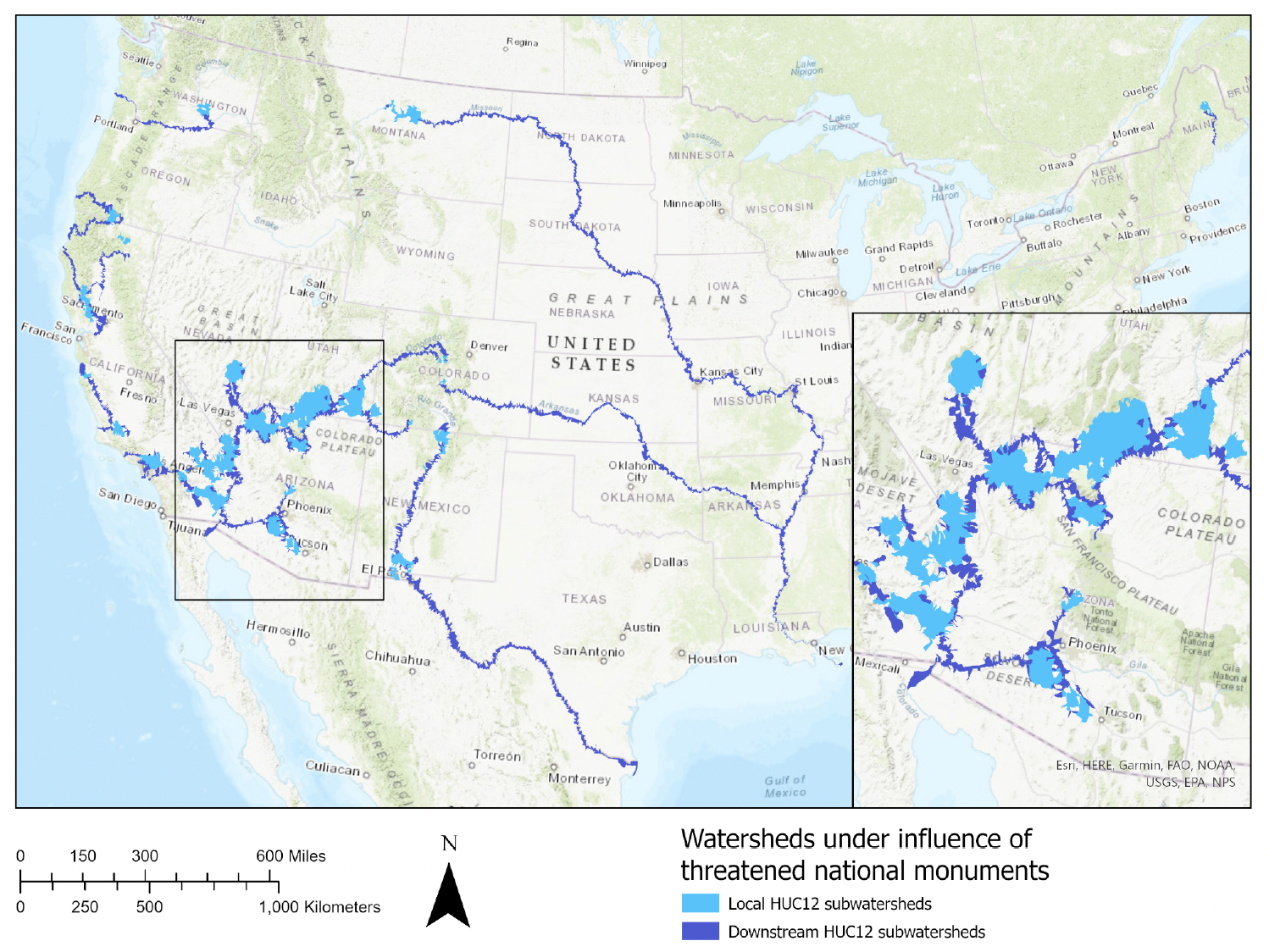
Figure 1: Local and downstream watersheds influenced by 31 at-risk national monuments in the United States.
The larger report from the Center for American Progress can be found here. CSP’s analyses are detailed and reported here.