

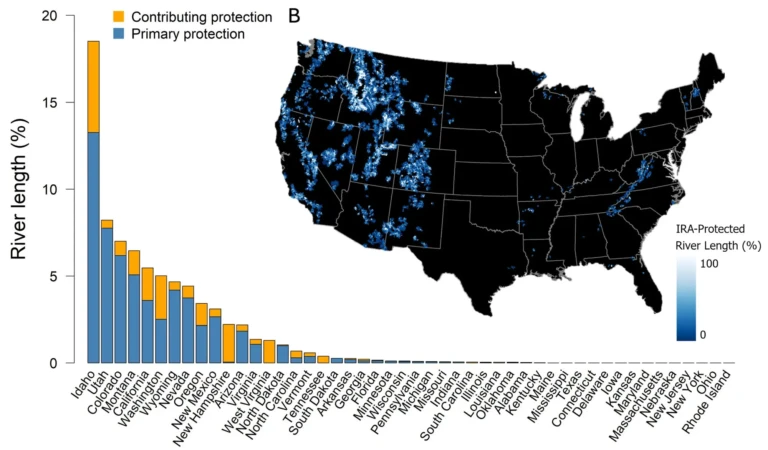
A new University of Washington and Conservation Science Partners study just published in PLOS Water finds that the 2001 Roadless Area Conservation Rule helps protect more than 80,000 miles of rivers across the continental United States, including nearly 62,000 miles that rely on the rule as their only federal protection. Those waterways support drinking water for an estimated 25-million Americans, underscoring the connection between forest policy and public water supplies. Researchers say forests improve water quality by filtering contaminants through soils and plant roots, reducing treatment needs for utilities and helping safeguard downstream communities.
The findings come as federal officials consider rescinding the roadless rule, which established inventoried roadless areas across the National Forest System, a move critics warn could expose protected national forest lands to more roadbuilding, logging and development. Lead author and Senior Associate Scientist at CSP, Julian Olden, said roadless areas “offer critical protection of wildlife habitat and recreational assets. In short, rivers in roadless areas are essential for both people and nature.” With public comments overwhelmingly opposed to repeal, and the U.S. Forest Service preparing further review, the study’s authors say any decision to weaken the rule should account for its role in protecting clean water, ecosystems and the communities that depend on them.
The full article is here:
Olden JD, Postel SL, Dombeck MP, Kesting H, Freeman P, Comte L. 2026. Assessing the value of the U.S. Roadless Rule for people and nature. PLOS Water 5(6): e0000538. https://doi.org/10.1371/journal.pwat.0000538.