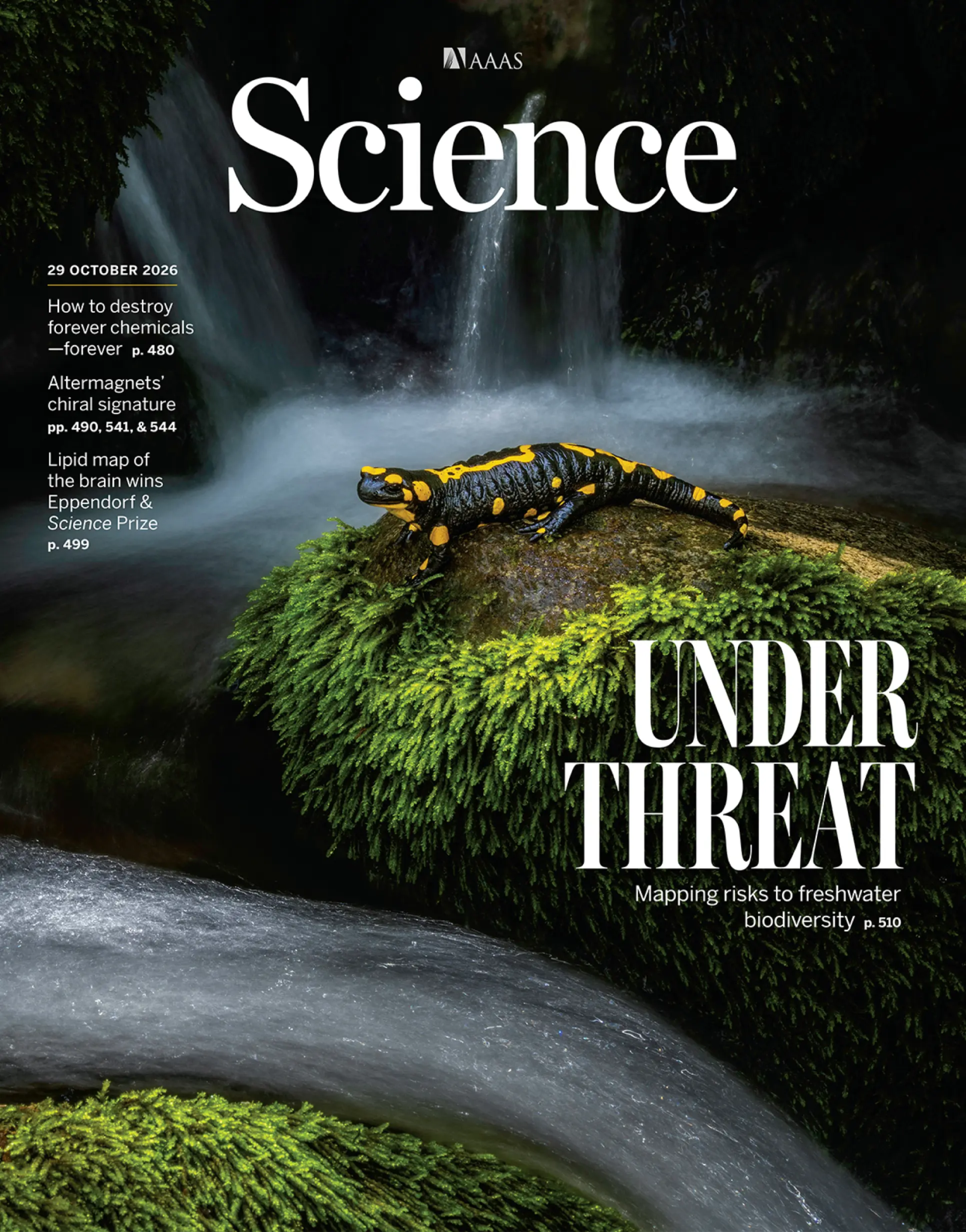

By leveraging the threat assessments from the International Union for Conservation of Nature (IUCN) with information about the spatial distribution of more than 21,000 freshwater species worldwide, an international team of researchers led by Christophe Brabant at McGill University and including Dr. Lise Comte from CSP, mapped risk to freshwater biodiversity from 45 human pressures, providing a new foundation for targeted conservation.
This new research published in Science provides an important resource for governments, conservation organizations, and researchers working to halt biodiversity loss, at a time where freshwater biodiversity is declining faster than biodiversity on land or in the oceans. The study identifies agriculture, dams, and agricultural runoff as the most widespread threats, with Europe and Northwest Africa facing particularly high levels of pressure. Importantly, regions facing greater cumulative threats also show higher extinction risks and more severe wildlife population declines. The researchers further demonstrate that whereas dominant threats vary across species groups and regions, freshwater species face consistently greater threats than their terrestrial counterparts, underscoring the need to prioritize freshwater biodiversity in global conservation efforts.
Read More:
Brabant, C., Pollock, L., Geldmann, J., Bendixen, M., Comte, L., Farooq, H., Hébert, K., Lehner, B., Sayer, C.A., Iversen, L.L. (2026). The global geography of threats to freshwater biodiversity. Science 394:510-514. DOI:10.1126/science.aeb7910.