

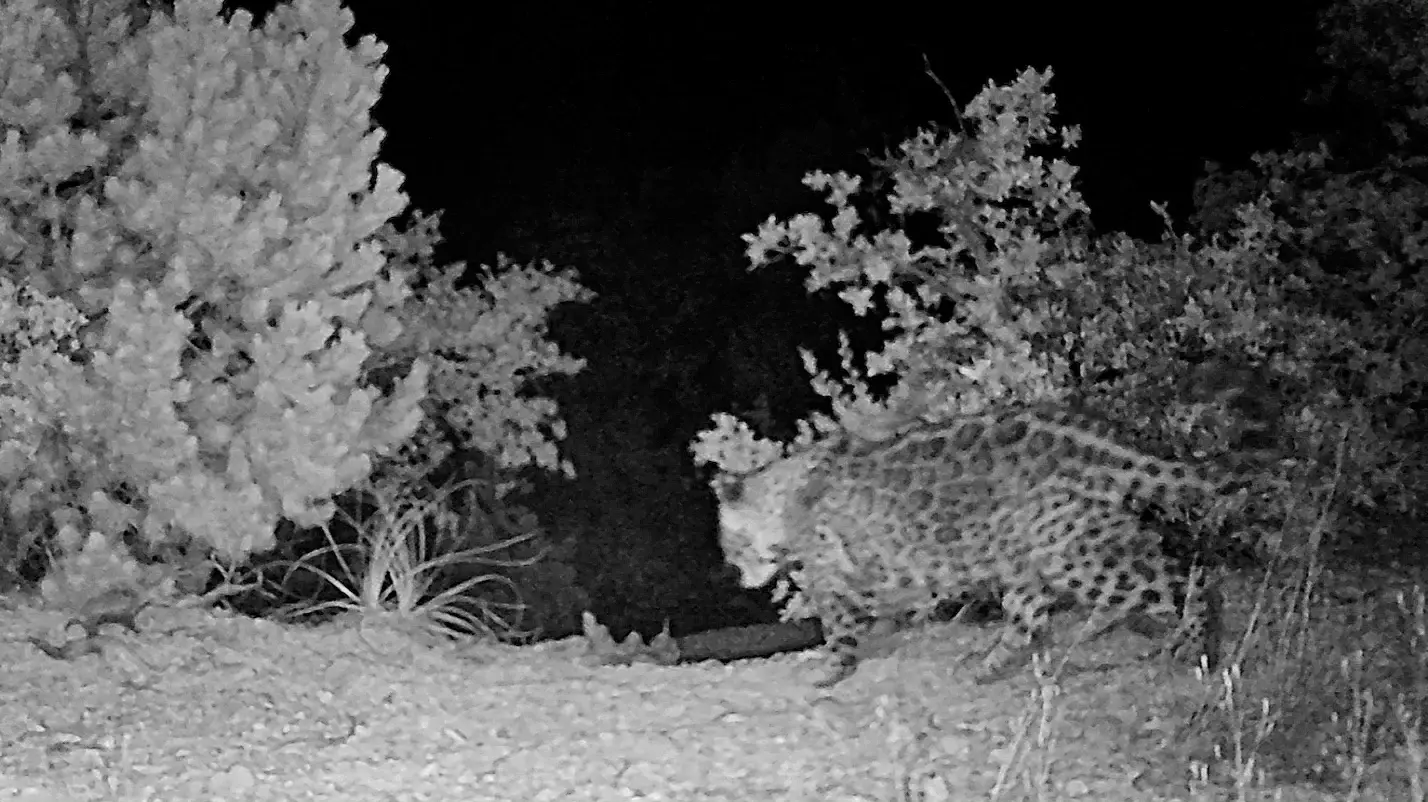
A jaguar recorded by a trail camera monitored by CSP in northern Sonora, Mexico, barely two miles from Arizona, appears to be a female, a finding that could reshape assumptions about how close the species is to re-establishing a breeding population in the United States. The New York Times covered the discovery on August 17, 2026, and CSP science helped confirm it.
When CSP postdoctoral scientist, Dr. Ganesh Marín, reviewed footage giving a clear view of the animal’s hindquarters, he sent the clip to Chief Scientist, Dr. Brett Dickson. “I was struck right away that I was likely looking at a female,” Dr. Dickson told the Times. He also observed skin folds consistent with a lactating animal, and circulated the video to a wider group of jaguar specialists; seven of nine agreed with the assessment of a likely female.
The significance is substantial. Female jaguars disperse far shorter distances than males, so a female in Sonora suggests the species’ breeding range already extends well north of where biologists had placed it. The last native female documented in the U.S. was killed near Arivaca, Arizona, in 1949, and the only jaguar currently known in the country is a lone male roaming southern Arizona. Indeed, the finding arrives as new border wall infrastructure and other human activities threaten several of the last functional wildlife corridors between the southwestern U.S. and Northern Mexico. This is an issue that connects directly to CSP’s long-running work on habitat connectivity, camera-trap monitoring, and conservation planning for wide-ranging carnivores.
Read the full story here at: The New York Times.